
💧 How to turn on the water
Every bed in the garden is a walk-in watering garden: the hose lives at the spigot, and you bring the elbow grease. This is the whole procedure — find a spigot, open the black knobs, water, and leave things ready for the next gardener.
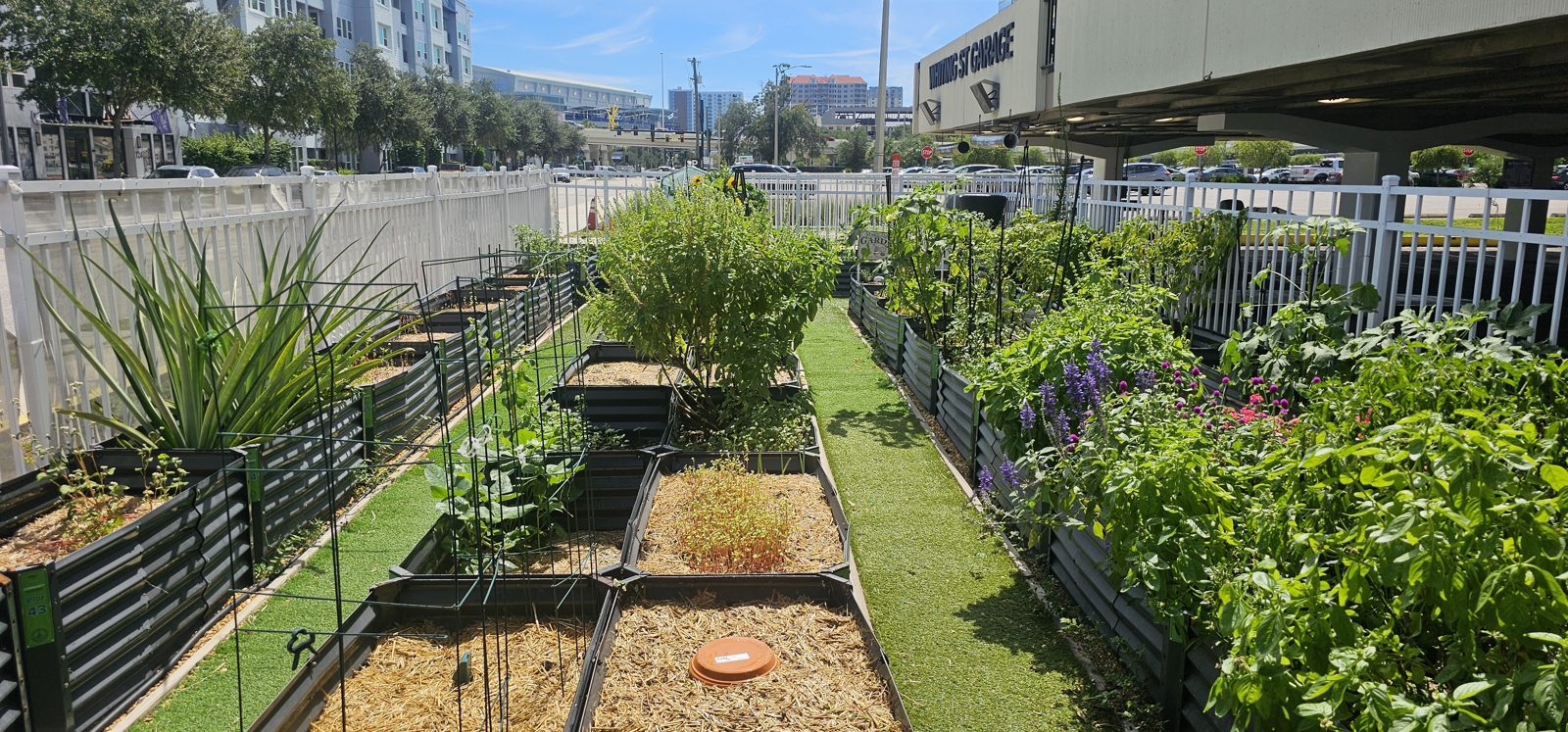
1. Find a spigot
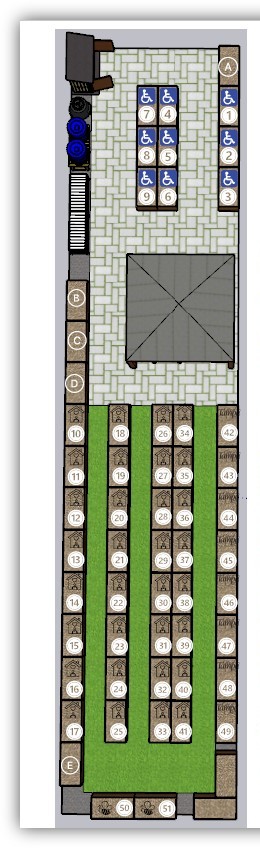
There are two spigots on the entrance side of the garden, one near each corner of the paved apron by the gate. On the plot map below they're the two blue round markers stacked on the left edge, just above the ramp grate. The nearest one saves your arms — walk your hose from whichever spigot is closer to your plot number.
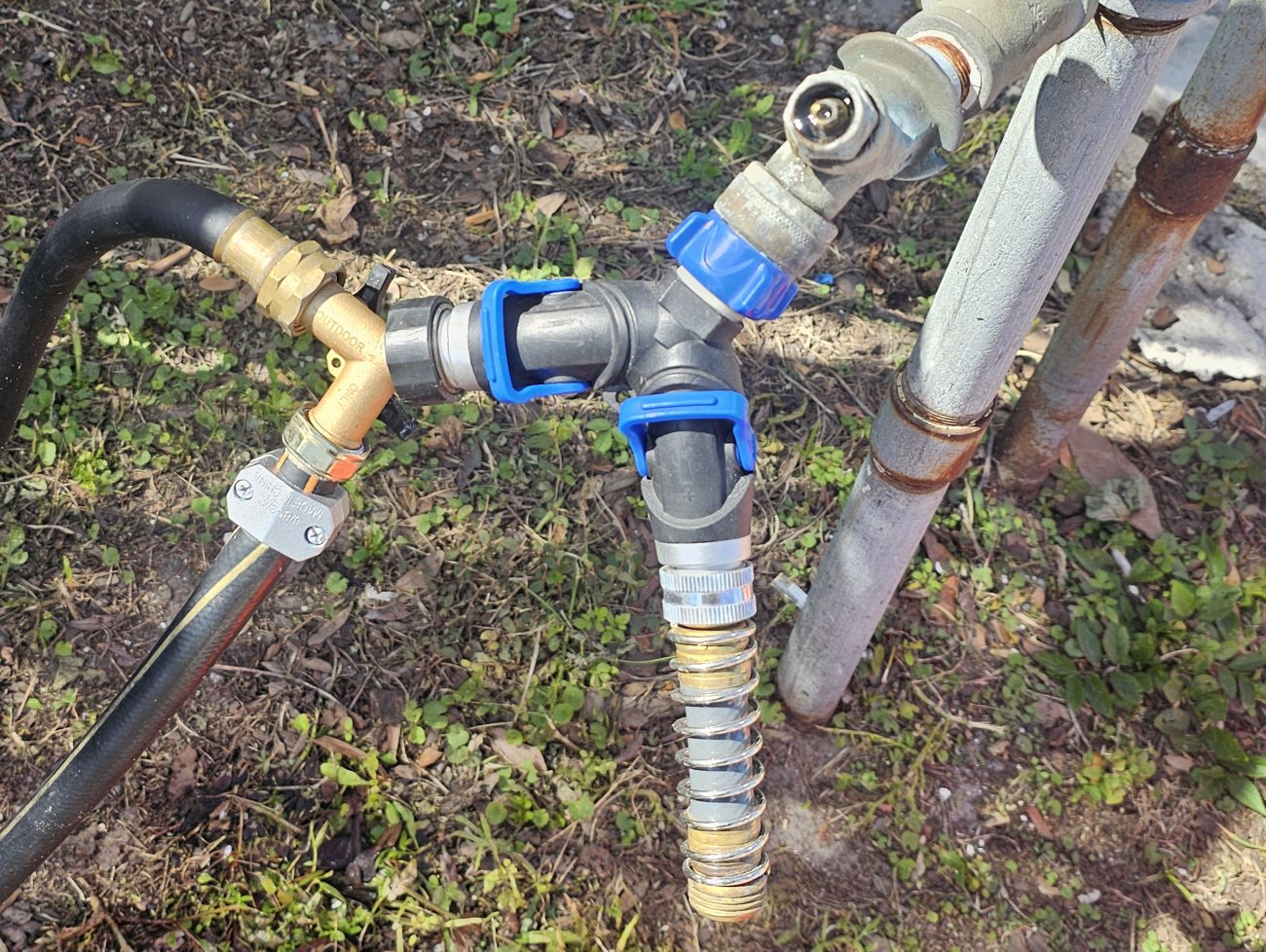
2. Connect (or borrow) the hose
Each spigot keeps a hose coiled on the hook beside it. Pull it off the hook and check the nozzle end is aimed at the beds, not the turf. If a neighbor is already using that spigot, walk to the other one — there is no schedule and no sign-up, just courtesy.
3. Turn the black knob INLINE with the hose
Here's the one move people get backwards at first: the spigot's black handle knob is a quarter-turn valve.
- Knob in line with the hose (parallel → open). The handle points along the hose's length, the same direction the water travels. That's ON.
- Knob across the hose (perpendicular → closed). The handle sticks out at a right angle to the hose. That's OFF — which is how you'll find it most mornings.
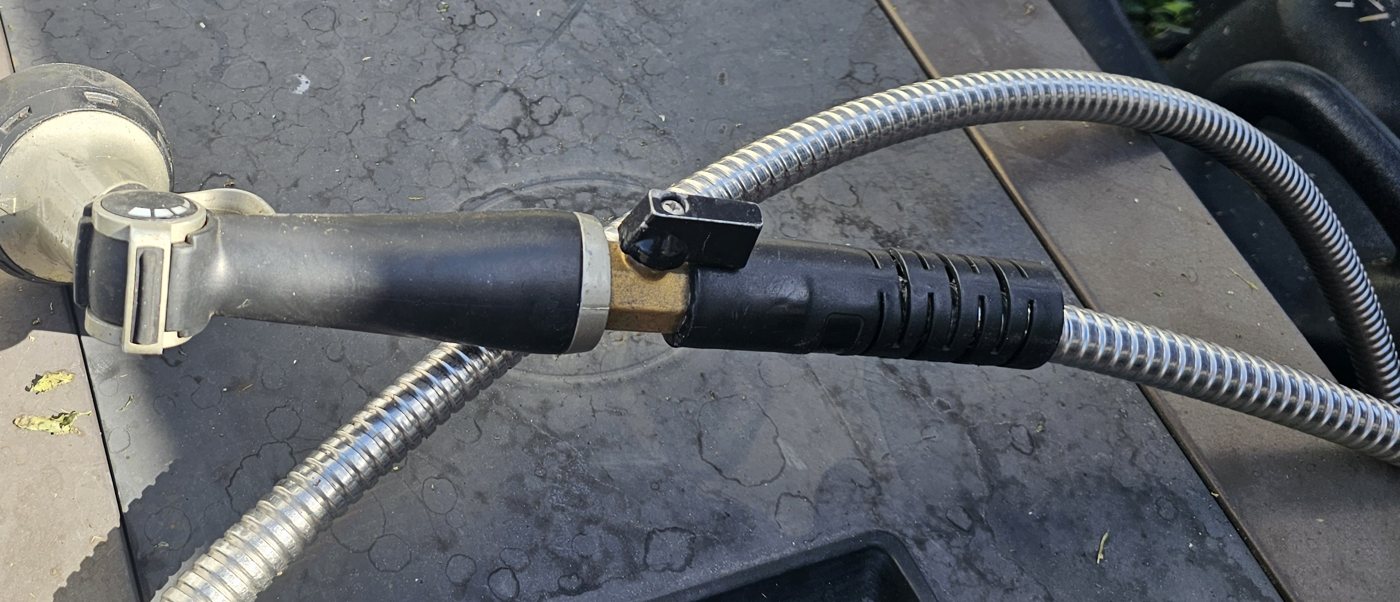
Quarter-turn the knob until it lies flat and parallel to the hose. Start gently: the mains are strong, and the first second of a cold hose will whip if the nozzle is pointed at your shins. Remember it as: "inline = flows, cross = stops."
If you've turned it a quarter turn and nothing happens, you went from closed to… still closed (they can be installed either way). Turn it the other direction a half turn — parallel to the hose, whichever way that happens to be, is open.
4. Water the bed, not the sidewalk
Soak the base of the plants until the soil is dark and moist to the first knuckle — one long drink beats three sprinkles. Morning is best; midday sun takes half your water as a gift. And check the weather strip on this site first: after a heavy Tampa downpour, the beds don't need you — that's why the forecast widget tells you when to skip.
5. Close up shop
- Turn the knob across (perpendicular to the hose) to close the water.
- Squeeze the nozzle once to bleed the pressure out of the hose.
- Coil the hose back onto its hook and hang the nozzle on the nail. Next gardener's job should take 30 seconds.
A leaking spigot or a burst hose? Note which corner it's in and drop a line in the 💧 watering channel — someone will flag City facilities.
Quick card
| Open | black knob parallel to the hose (inline) |
|---|---|
| Close | black knob at a right angle across the hose |
| Where | two spigots, west side, both corners of the entrance apron |
| Best time | early morning; skip after ≥ 0.8″ of rain |
| Leave it | coiled, hung, zero drips |